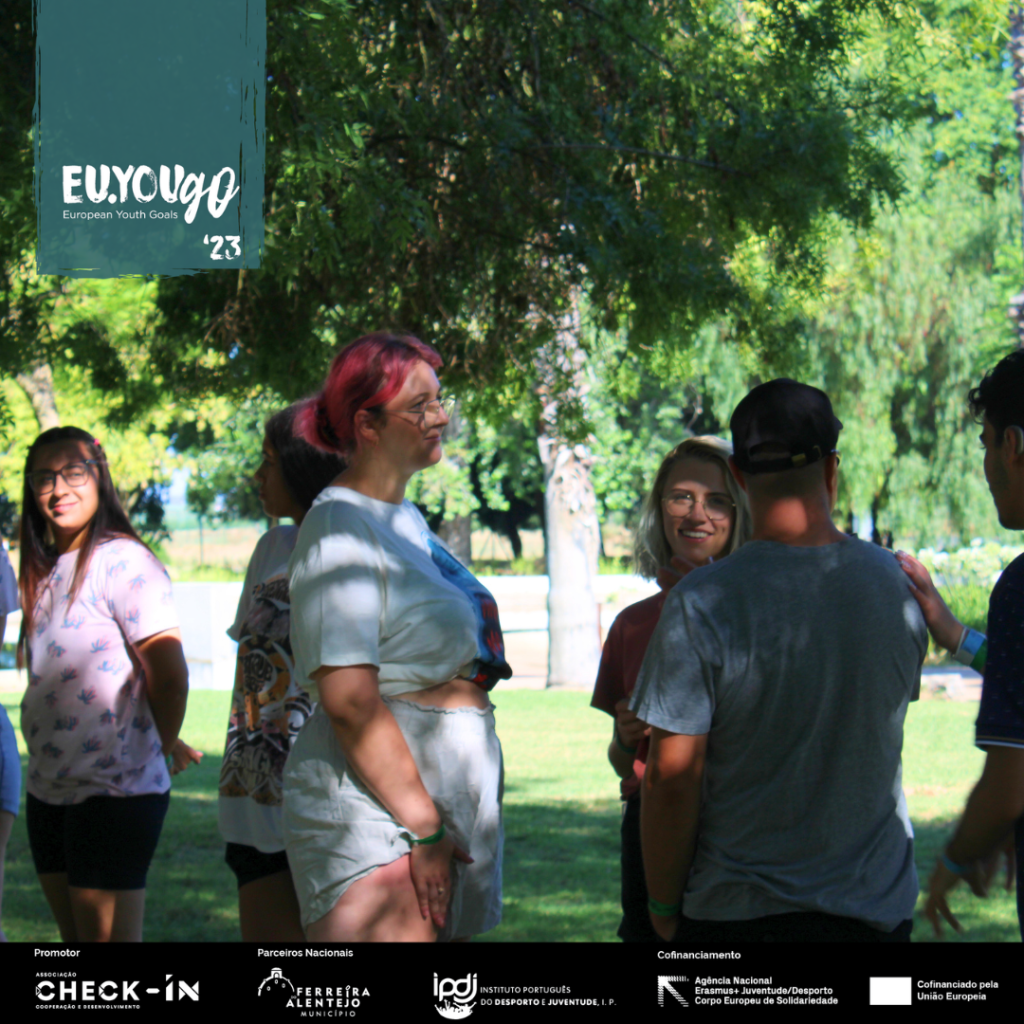
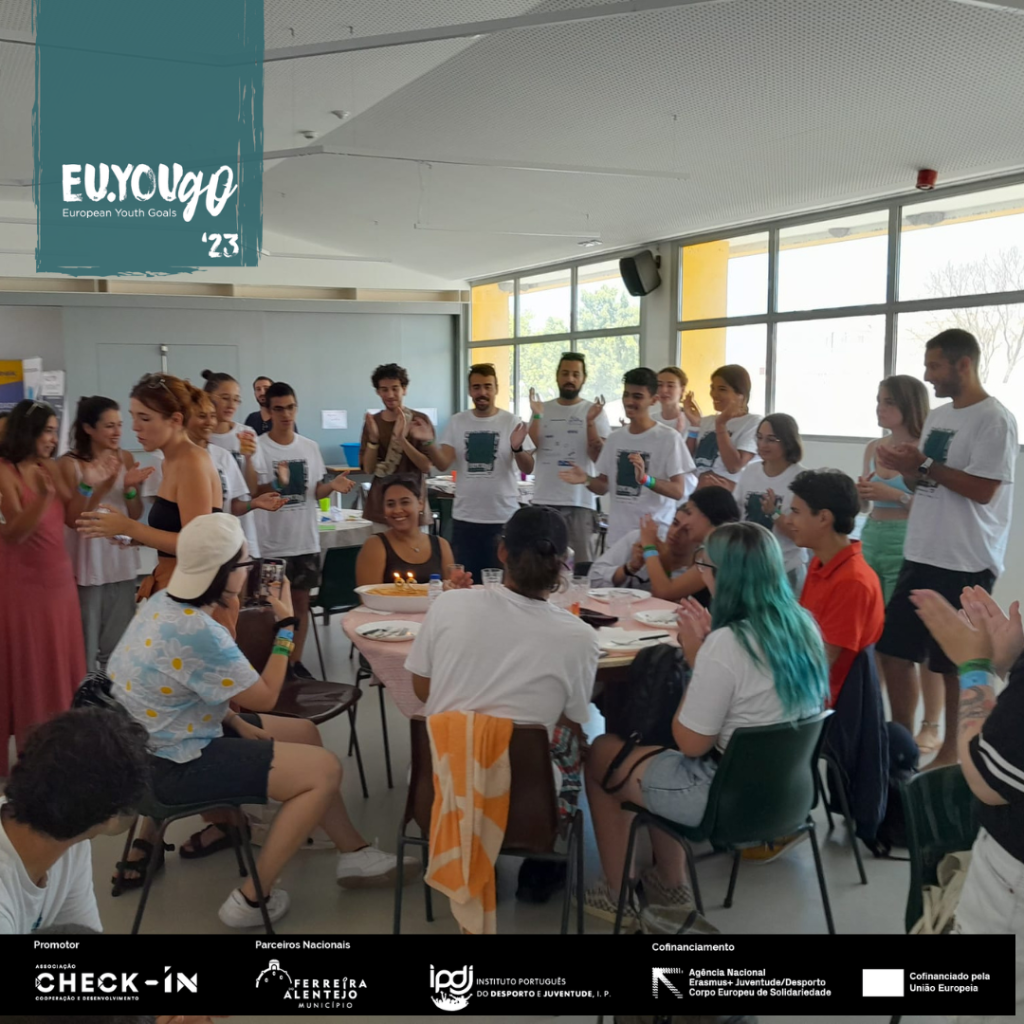
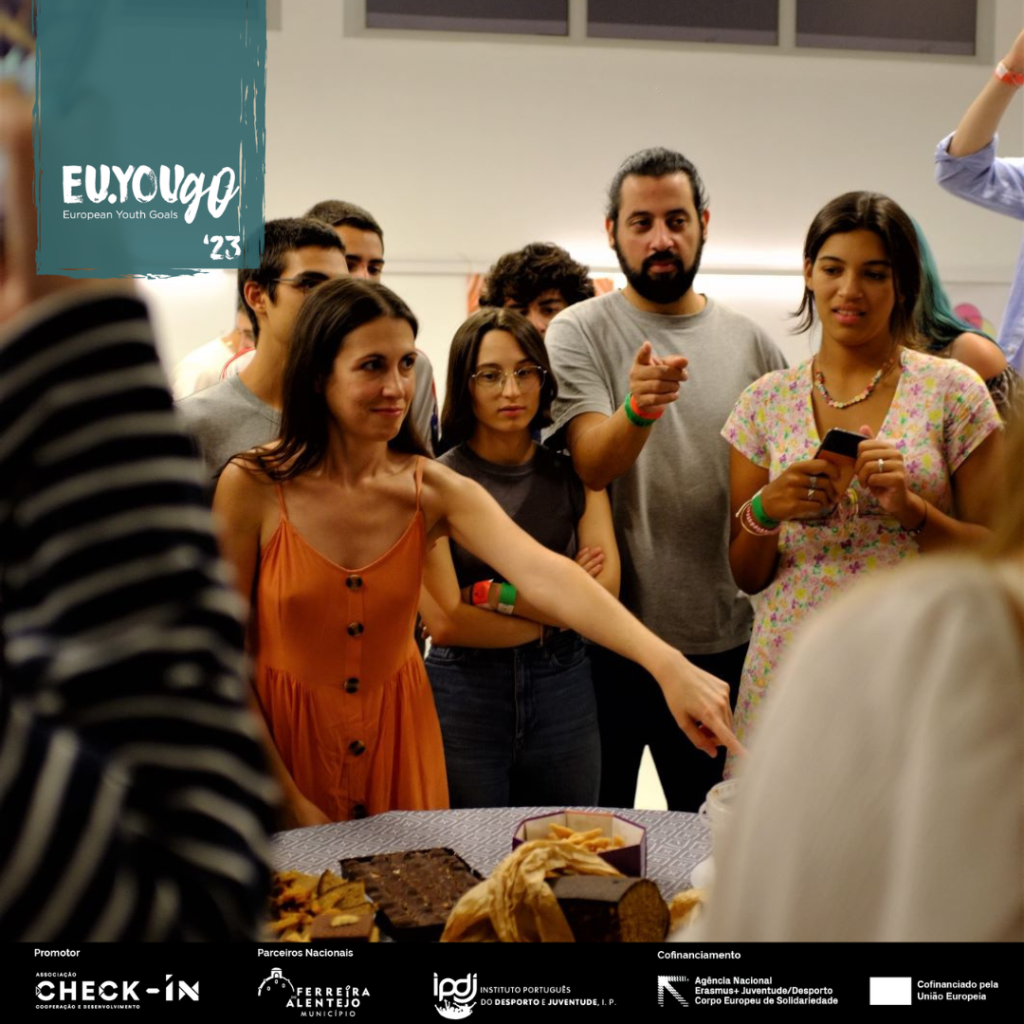
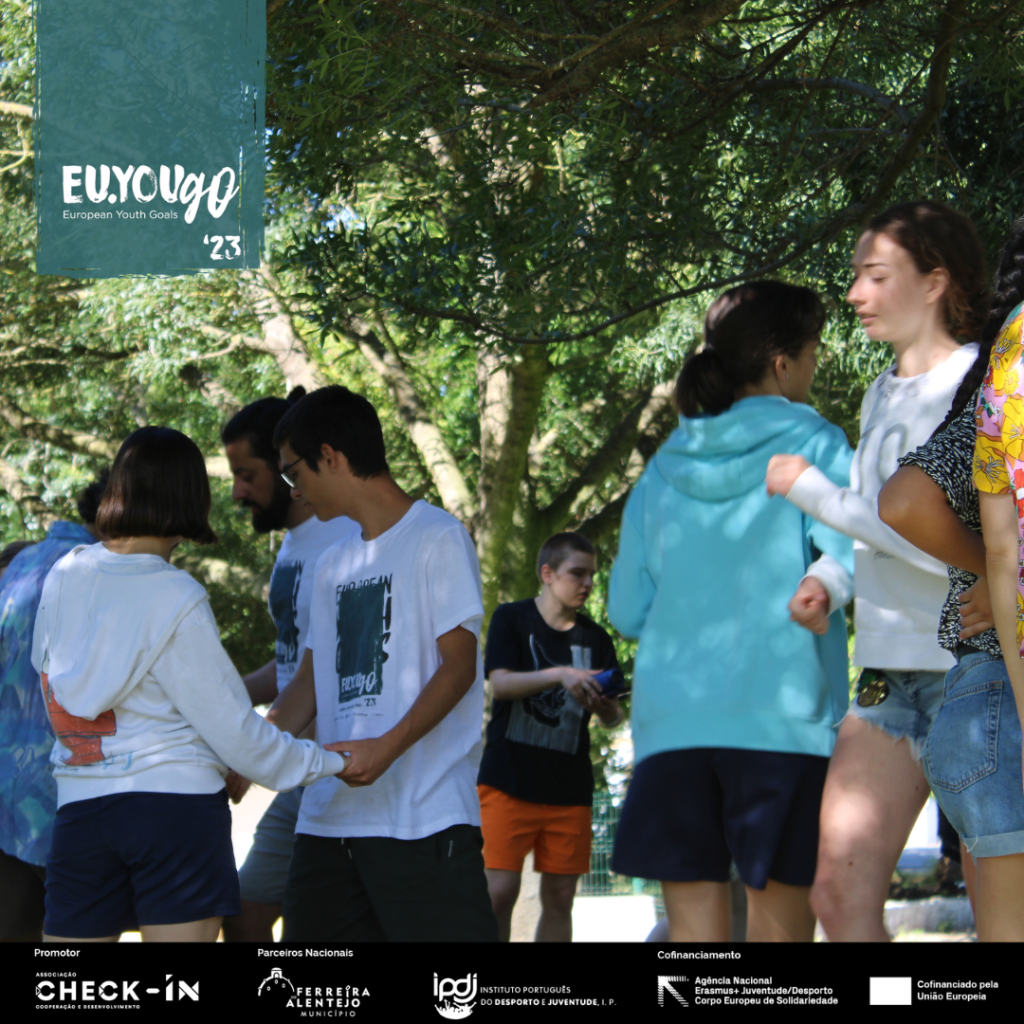
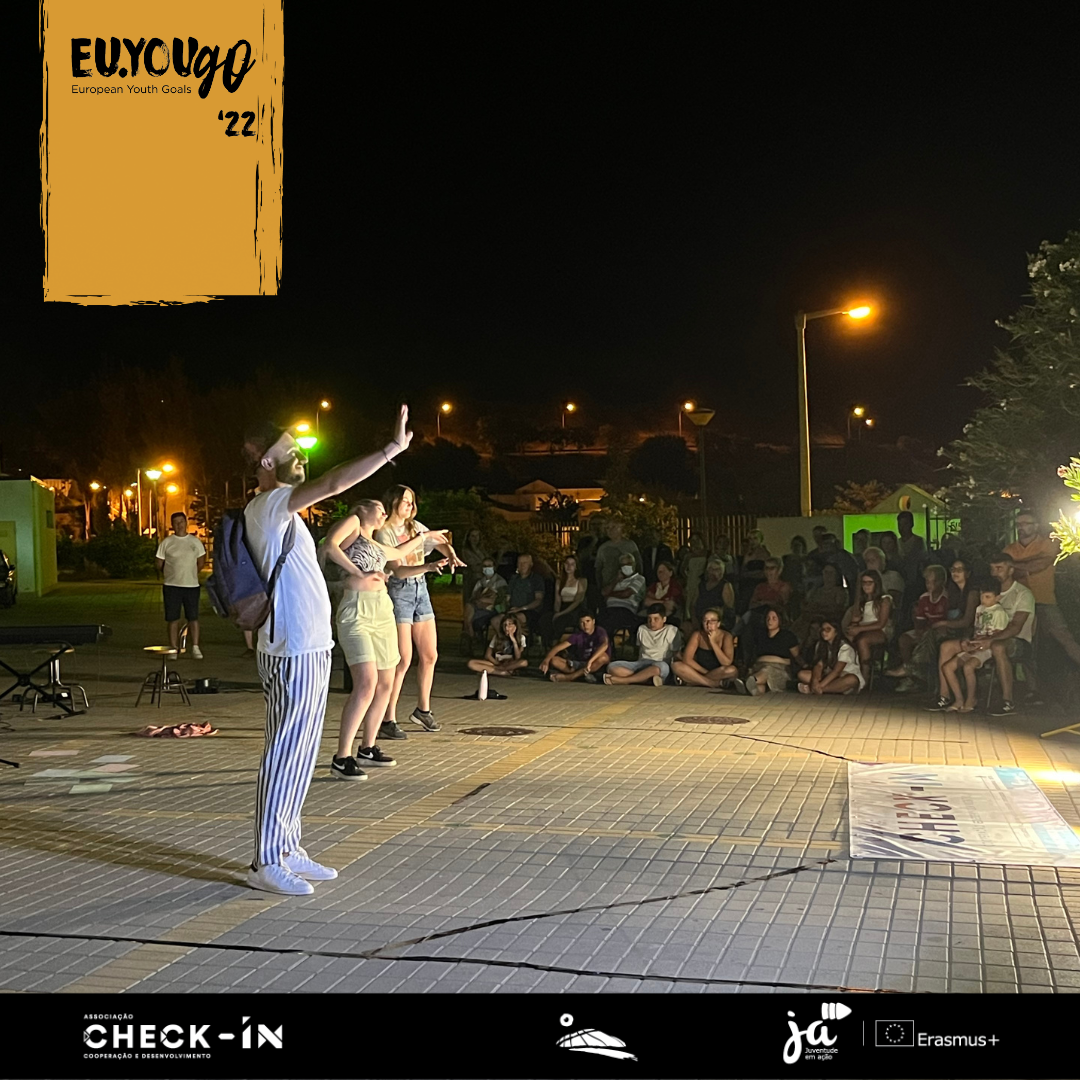
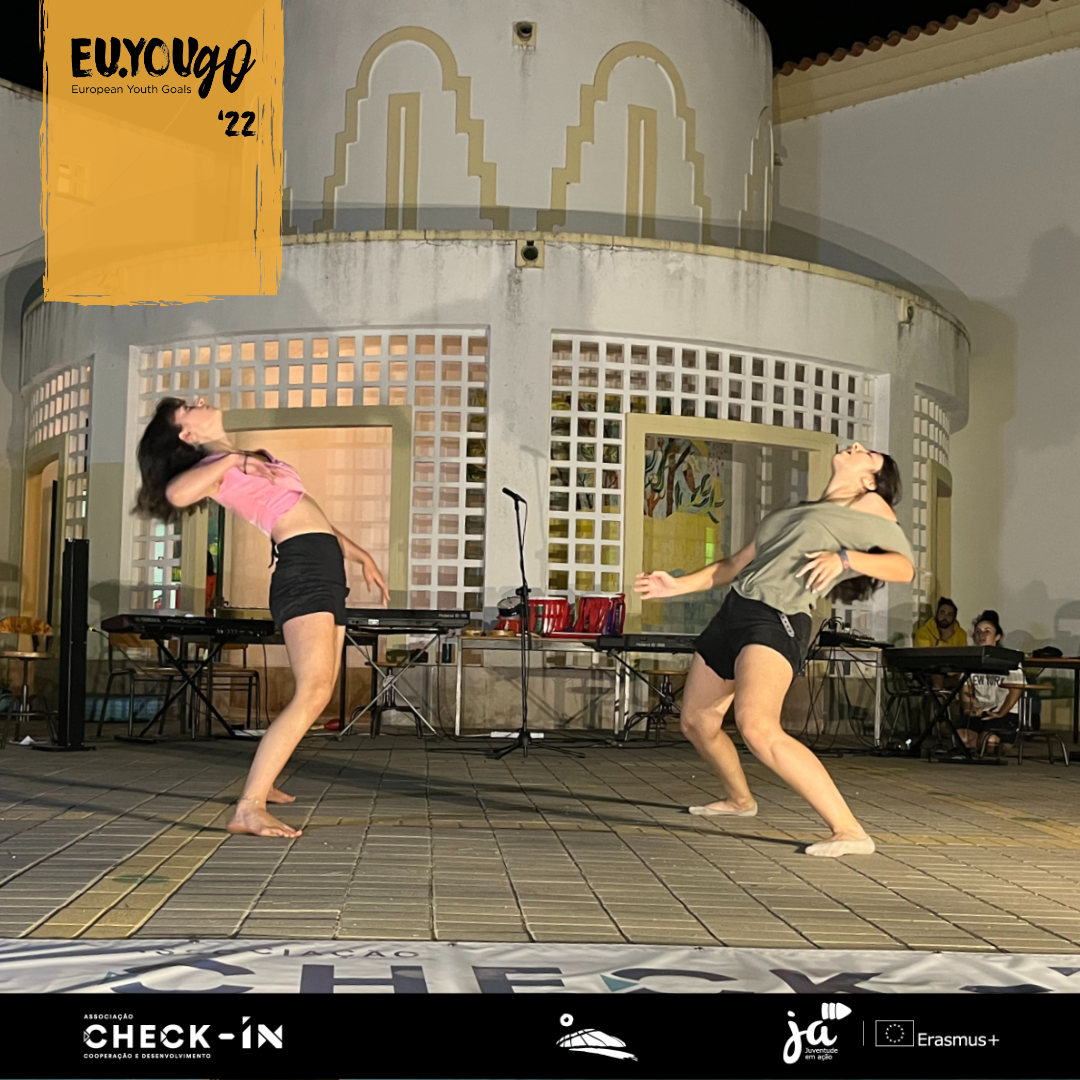
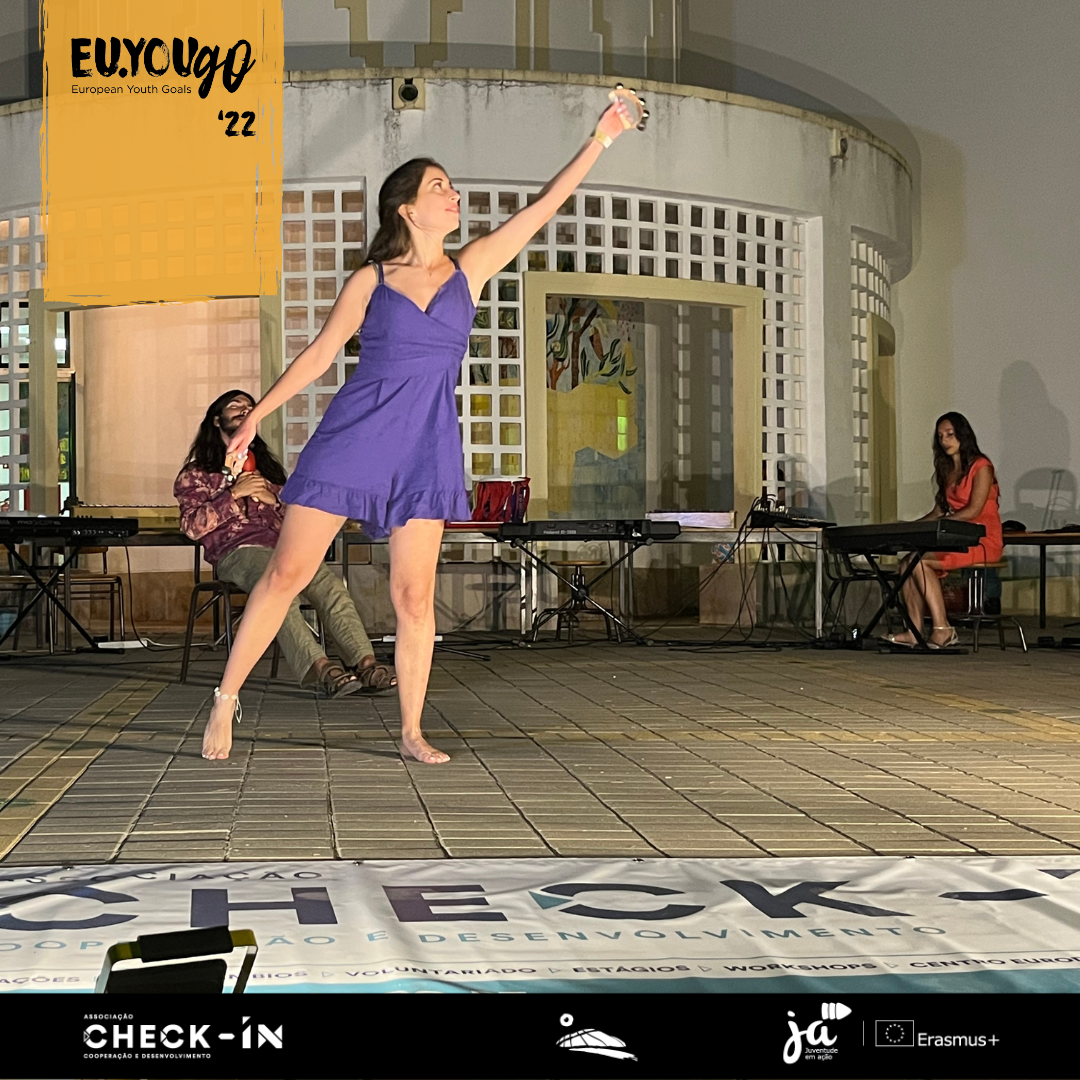
EU.YOU.GO é um intercâmbio juvenil internacional que envolve jovens provenientes de 5 países europeus (Itália, Lituânia, Grécia, Polónia e Portugal), que se realiza de 21 de julho a 01 de agosto 2025 em Ferreira do Alentejo.
A Associação Check-IN desenvolve este intercâmbio inserido nos “Objetivos Europeus da Juventude”. Entre o ano de 2021 e 2027, trabalhamos 5 objetivos: a União Europeia Conectada com os Jovens (YG1), como impulsionar a Juventude rural (YG6), criar uma educação de qualidade (YG8), envolver as organizações de Juventude e Programas para Jovens (YG11), sociedades inclusivas (YG3). E em 2024, acrescentamos a Emprego de Qualidade para todos (YG7).
Este intercâmbio juvenil procura dar aos participantes novos pontos de vista sobre os Objetivos Europeus da Juventude, através da arte que posteriormente irão ser expressadas à comunidade local através da escultura, da dança, do teatro e da música. Este intercâmbio procura consciencializar os jovens sobre o futuro da Europa. O objetivo principal deste projeto é saltar fronteiras, transpassar barreiras sociais e económicas e encontrar valores comuns entre as vastas culturas, abrindo a mente dos jovens à interculturalidade e aos Objetivos Europeus da Juventude.
Durante estes 10 dias os jovens têm a oportunidade de frequentar atividades que estimulam a criatividade, através da expressão corporal, sonora, artes plástica e multimédia, representarem a diversidade cultural ali presente.
Daremos como término o intercâmbio uma apresentação aberta à comunidade local apresentando o que iremos trabalhar durante estes dias em Ferreira do Alentejo.
Este projeto foi aprovado pela Agência Nacional Erasmus + Juventude em Ação, com a referência: 2024-1-PT02-KA151-YOU-000224947 Contamos com o apoio altamente comprometido da Câmara Municipal de Ferreira e ainda do Instituto Português do Desporto e Juventude, a parceria de 4 entidades europeias e outras entidades locais.
Mais informações: check-in@checkin.org.pt
Celso Zanini é um multiartista brasileiro a viver em Portugal, com mais de 15 anos de carreira no teatro, música e audiovisual. Formado em Teatro pela UFRGS, foi membro fundador do Grupo Cerco, atuando como ator, dramaturgo e compositor em espetáculos premiados como *O Sobrado*, *Incidente em Antares* e *Arena Selvagem*. Em 2022, criou a opereta-rock *Trago Sorte Mentira & Morte*, distinguida com os Prémios Açorianos de Melhor Dramaturgia e Melhor Trilha Sonora. Atualmente, trabalha no teatro musical e como Designer de Narrativa.
Maria Kopke é uma artista e escritora luso-brasileira, com formação em música e teatro, e um mestrado em Estudos Comparatistas. Com talento para a narração de histórias, tem experiência em composição de músicas, escrita de roteiros, direção, ensino, e tem trabalhos de ficção e não ficção publicados por publicações portuguesas e internacionais. Em todo o seu trabalho, ela procura usar a arte como uma ferramenta para construir pontes e criar oportunidades de diálogo.
Sara nasceu em Portugal e viajou pela Europa para aprender sobre a vida e a arte. É uma performer de dança, teatro e música, e uma professora e facilitadora de movimento e dança. Sara acredita que todos são dançarinos desde o momento do nascimento e que a dança e a arte em geral são ferramentas poderosas para reconectar os seres humanos com a sua essência de seres vivos criativos que fazem parte deste grande, complexo e belo ecossistema chamado Terra.
Sarah Pinto é uma artista multidisciplinar baseada em Lisboa. Licenciada em Relações Internacionais em 2015, tem experiência em diferentes áreas, como professora de línguas, facilitadora em workshops e intercâmbios de jovens Erasmus+, turismo e comércio. Sarah explora as artes visuais como uma forma de reconectar consigo mesma, com os outros e com a natureza, criando para expressar sentimentos e emoções.
Parceiros internacionais
– Hellenic Youth Participation, Grécia
– Associazione Agrado, Itália
– Society and Enterprise Development institute VVPI, Lituânia
– IAiRS, Polónia
– Omix – Municipality of Ribadavia, Espanha
Parceiros Nacionais
– Junta de Freguesia de Vila Nova de Milfontes
– Instituto Português do Desporto e Juventude
Durante o projeto vamos publicar um diário do projeto para manter a par todos os interessados
DIA 1
Os nossos participantes chegaram à acolhedora cidade de Ferreira do Alentejo, prontos para iniciar uma empolgante viagem intercultural. Representando a Grécia, Itália, Lituânia, Polónia, Portugal e Espanha, encontravam-se pela primeira vez – pelo que o dia se concentrou em quebrar o gelo e criar as primeiras ligações. A atmosfera estava cheia de curiosidade e entusiasmo, enquanto todos partilhavam as suas primeiras impressões e aprendiam sobre as culturas uns dos outros.
Começámos com jogos de apresentação enérgicos, que combinavam memória e movimento. Os participantes apresentaram-se com gestos únicos, seguidos de um jogo em que tinham de formar os seus nomes usando letras emprestadas aos outros. Estas interações lúdicas estabeleceram o tom para o trabalho de equipa e a colaboração. Seguiu-se uma atividade dinâmica de “speed dating”, onde os participantes rodavam em curtas conversas individuais, respondendo a perguntas divertidas como “Que três objetos levarias para uma ilha deserta?” ou “Se tivesses um superpoder, qual seria?”. Estas rápidas interações despertaram risos e criaram a base para uma dinâmica de grupo amigável.
A parte temática da troca começou com uma apresentação do projeto “EU.YOU.GO IV (2025)”. Os participantes aprenderam sobre o Erasmus+, o Youthpass e o Corpo Europeu de Solidariedade, e partilharam as suas expectativas, receios e o que esperavam contribuir nos dias seguintes. Isto ajudou a alinhar o grupo em torno de um propósito comum e preparou-os para uma participação significativa.
À tarde, explorámos os 11 Objetivos Europeus para a Juventude através de um jogo de equipa interativo. Utilizando códigos de cor e símbolo e pensamento rápido, as equipas decifraram mensagens e responderam a perguntas relacionadas para ganhar pontos. Esta atividade envolvente combinou aprendizagem e trabalho de equipa, aumentando a consciência sobre questões-chave da juventude na Europa.
Depois de uma breve sessão de reflexão, o dia terminou com a primeira Noite Intercultural, celebrando a Grécia, a Polónia e Portugal. Os participantes desfrutaram de danças tradicionais, música, língua e gastronomia, numa animada noite de intercâmbio cultural. A energia e o entusiasmo criaram um tom vibrante para o restante do projeto.
DIA 2
Ao nascer do sol sobre Ferreira do Alentejo, os participantes reuniram-se para um dia cheio de criatividade, expressão e exploração dos Objetivos Europeus para a Juventude. A manhã começou com um pequeno-almoço alegre, seguido de um jogo energizante conduzido pela equipa grega, que provocou risos e promoveu a ligação entre todos.
Os participantes exploraram, em seguida, os Objetivos Europeus para a Juventude através de uma atividade criativa de dramatização. Divididos em equipas, receberam um objetivo específico e cinco palavras-chave, que utilizaram para criar pequenas apresentações. Sem nomear o objetivo, representaram o seu significado através de histórias e movimentos, desafiando a audiência a adivinhar. Este exercício dinâmico destacou o trabalho de equipa e o poder da arte para expressar valores sociais. Mais tarde, os participantes analisaram como estes objetivos se relacionam com os seus próprios países, discutindo a participação juvenil e o acesso a programas. Esta partilha revelou tanto desafios comuns como realidades nacionais diversas.
À tarde, foram introduzidos quatro ateliers artísticos — Música, Dança, Teatro e Artes Visuais — através de atividades práticas e lúdicas. Cada atelier ofereceu uma forma diferente de abordar temas da juventude de forma criativa e colaborativa. Uma breve sessão de reflexão permitiu que os participantes partilhassem pensamentos e sentimentos antes de desfrutarem de algum tempo livre. O dia terminou com uma noite intercultural dedicada à Itália, Lituânia e Espanha. Através da música, comida, danças e tradições, os participantes celebraram a diversidade cultural e aprofundaram a sua ligação uns com os outros, numa atmosfera repleta de alegria e descoberta.
DIA 3
O terceiro dia em Ferreira do Alentejo foi inteiramente dedicado à exploração do tema do emprego de qualidade através de quatro ateliers criativos: Artes Visuais, Teatro, Dança e Música. Os participantes mantiveram-se nos percursos escolhidos, utilizando ferramentas artísticas para refletir sobre inclusão, confiança e valores no local de trabalho.
No atelier de Artes Visuais, ilustraram valores pessoais, criaram bandas desenhadas que mostravam tanto ambientes de trabalho ideais como tóxicos, e esculpiram símbolos como relógios e balanças para representar o emprego justo. O Teatro focou-se na comunicação não verbal — usando movimento, silêncio e dinâmica de grupo para explorar empatia, liderança e inteligência emocional.
O grupo de Dança trabalhou com confiança e emoção, movendo-se de olhos fechados e reagindo livremente à música — destacando a importância da segurança emocional na vida profissional. Os participantes de Música exploraram a narrativa sem palavras, usando instrumentos para ecoar sons, construir ritmos de grupo e criar bandas sonoras ao vivo baseadas em histórias improvisadas.
Após o almoço, um energizador conduzido pela equipa italiana trouxe diversão e movimento. O dia terminou com grupos de reflexão e tempo livre descontraído, encerrando um dia intenso e expressivo de aprendizagem através da arte.
DIA 4
O dia começou com uma exploração cultural de Ferreira do Alentejo através de visitas a dois museus locais. No Museu de Artes e Cultura Tradicional, os participantes aprenderam sobre os ofícios da região e ficaram particularmente tocados com a história de Ferreira — uma mulher ferreira pioneira cujo legado suscitou reflexão sobre género e emprego de qualidade. No Museu Arqueológico, os artefactos antigos proporcionaram uma ligação profunda à história do território.
De volta ao espaço do projeto, os ateliers criativos continuaram. No teatro, os participantes escreveram e interpretaram histórias pessoais, experimentando diferentes perspetivas e tons para explorar como a narrativa pode moldar a compreensão. O grupo de dança focou-se na confiança e na expressão emocional através da improvisação e do movimento, promovendo a ligação e a empatia entre todos. Nas artes visuais, a natureza serviu de inspiração, com meditação ao ar livre, pintura abstrata e uma atividade única de desenho baseada em cenas observadas por breves momentos — captando a emoção através da memória. Na música, exercícios de percussão corporal e ritmo conduziram à criação colaborativa de uma banda sonora, mostrando como o som expressa sentimentos e fortalece a coesão do grupo.
Um energizer lúdico conduzido pela equipa polaca trouxe uma pausa divertida, e no final do dia os participantes sentiram-se mais conectados — à região, uns aos outros e aos valores que continuam a expressar através da arte.
DIA 5
A criatividade encontrou a sustentabilidade em força total, enquanto os participantes exploravam como materiais descartados — e até emoções negligenciadas — podem ser transformados em expressão significativa e partilhada. O dia começou com um debate animado sobre moda rápida e desperdício têxtil. Os participantes refletiram sobre questões ambientais e éticas, discutiram os desafios específicos de reciclagem em cada país e criaram declarações reflexivas utilizando palavras-chave partilhadas. Um quiz e exemplos de marcas de upcycling ofereceram uma perspetiva positiva sobre como a inovação pode transformar o desperdício em arte e moda.
Passando da conversa para a criação, os participantes trabalharam em grupos para produzir obras de arte com tecidos descartados. Os resultados foram imaginativos e ousados: um “Noite Estrelada” em ganga, colagens vibrantes de tecido e peças abstratas que expressavam temas como ansiedade, esperança e sustentabilidade. Cada ponto e forma contava uma história de regeneração e cuidado.
À tarde, os ateliers artísticos atingiram o seu auge expressivo. O grupo de dança concentrou-se no fluxo e na respiração, espelhando movimentos em sequências silenciosas que construíram confiança e presença. Os participantes de música exploraram percussão corporal e ritmo para criar uma banda sonora sobre um filme mudo, demonstrando como o som sozinho pode moldar narrativa e emoção. O grupo de teatro criou cenas baseadas em movimento e narrativa sem palavras, usando coreografia e jogos criativos para comunicar com humor e profundidade. Os artistas visuais construíram um “jardim do lixo” cheio de borboletas de plástico e árvores de latas — uma instalação lúdica que lembrava a todos que a beleza pode ser encontrada no que foi descartado.
No final do dia, os participantes não só tinham criado peças impactantes, como também explorado como a arte pode inspirar mudança — mostrando que até aquilo que parece inútil pode conter potencial para renovação e ligação.
DIAS 6, 7 e 8
After several days of deep artistic exploration, participants welcomed a well-earned pause on Day 6—a free day to rest, connect informally, and explore the peaceful rhythms of Ferreira do Alentejo. Some wandered through the town’s quiet streets or visited local cafés, while others simply took time to reflect, recharge, or enjoy spontaneous moments with new friends.
The following day marked a creative shift—from individual expression to collective storytelling. Each artistic workshop began merging into a shared vision, as music, theatre, dance, and visual arts came together to shape a powerful final performance. Themes of work, identity, and human connection threaded through the rehearsals, as participants used rhythm, movement, voice, and imagery to translate their experiences into a single, collaborative story. The atmosphere was focused yet energizing, filled with discovery and artistic flow.
In the evening, that intensity gave way to pure joy as the group gathered for Karaoke Night—a celebration of togetherness, laughter, and fearless fun. Songs in every language echoed through the space, and whether solo or in playful groups, each performance brought smiles and applause.
On Day 8, the final preparations took full shape. Rehearsals became more unified, as all artistic elements were woven together into a single, collective performance. Every participant contributed their voice, energy, and creativity. By merging all forms of art—movement, voice, sound, and visuals—participants co-created a performance that is not just a show but a collective voice.
DIA 9
O dia marcou o tão aguardado espetáculo final, trazendo uma mistura de entusiasmo e nervosismo entre os participantes. O dia inteiro foi dedicado aos ensaios — primeiro dentro de cada atelier, depois como grupo completo — para finalizar a estrutura, o ritmo e o fluxo geral do espetáculo. O atelier de artes visuais liderou a decoração do palco, enquanto a equipa da Câmara Municipal local forneceu apoio essencial na instalação de iluminação e som.
Antes da apresentação, os participantes fizeram uma pausa para respirar, refletir e ganhar confiança no trabalho que tinham criado ao longo dos dias anteriores. O espetáculo da noite revelou-se um enorme sucesso, atraindo uma grande audiência entusiasta. Uma ampla variedade de apresentações — desde dança até teatro — destacou os diversos talentos do grupo, recebendo aplausos calorosos e reconhecimento do público.
A noite terminou de forma celebratória, com participantes e membros da equipa reunindo-se para desfrutar do sucesso do esforço coletivo.
DIA 10
Após a emoção do espetáculo final, o Dia 10 foi dedicado à reflexão e ao encerramento. De manhã, os participantes preencheram formulários de avaliação como parte do processo final de avaliação—um passo essencial para analisar o impacto da troca juvenil e identificar áreas de melhoria para o futuro.
Seguiu-se uma discussão em grupo, onde os participantes partilharam as suas impressões sobre a experiência, aprendizagens pessoais e momentos memoráveis da troca. Foi um espaço significativo de reflexão, valorização e reconhecimento da jornada de cada pessoa. A tarde ofereceu tempo livre para que os participantes aproveitassem as suas últimas horas em Ferreira do Alentejo. Alguns escolheram revisitar locais favoritos na cidade, enquanto outros passaram o tempo a jogar, ouvir música ou a relaxar juntos junto à piscina—aprofundando amizades e criando memórias duradouras.
A troca concluiu-se com um jantar de despedida especial num restaurante local. Foi uma noite alegre e emotiva, celebrando não só o sucesso do programa, mas também as ligações e experiências partilhadas ao longo da semana.
WORKSHOP DE ARTES VISUAIS
Com Sarah Pinto como facilitadora do atelier de artes visuais, os participantes exploraram diferentes formas de se expressarem através das suas criações.
A primeira atividade, para apresentar a todos o atelier, consistiu em criar livremente uma escultura concreta em pequenos grupos. Usando os materiais disponíveis (papel colorido, fita adesiva, lápis, cartas de baralho, etc.), dois grupos criaram flores, um grupo criou uma máscara e o último grupo construiu uma árvore com cartas de baralho. Após esta atividade introdutória, os participantes que tinham escolhido o atelier de artes visuais reuniram-se para discutir o tema do emprego justo. Estas discussões em torno do objetivo europeu escolhido para esta edição resultaram em dois cartazes em banda desenhada. Uma banda desenhada representava um ambiente de trabalho saudável e a outra um ambiente de trabalho pobre.
A atividade seguinte envolveu o trabalho com argila. O objetivo era esculpir totens que representassem as características mais importantes de um emprego justo. O atelier de artes visuais deu também grande ênfase à autoexpressão. Os participantes tiveram a oportunidade de pintar livremente as suas emoções para as exteriorizar um pouco. Foram ainda convidados a escolher uma palavra de uma seleção fornecida pela facilitadora e a representá-la de forma criativa.
Os últimos dias dos ateliers concentraram-se na preparação para o espetáculo final. O objetivo era criar cenários que complementassem o trabalho desenvolvido nos outros ateliers. Os participantes de artes visuais criaram um jardim em cartão e papel colorido para representar a parte da “natureza” do espetáculo. Além disso, para ilustrar a canção final do grupo de música, criaram uma grande casa em cartão que seria pintada de amarelo.
Por fim, os participantes de artes visuais participaram ativamente no espetáculo final, entregando pássaros de origami ao público, exibindo um cartaz decorado e integrando as cenas de outros participantes que representavam “flores”, “trabalhadores” ou “máquinas”.
WORKSHOP DE DANÇA
O atelier de dança não se foca num tipo específico de dança, mas sim na consciência corporal e no movimento. Sara Baptista, a facilitadora do atelier, trabalha com os participantes no sentido de os ajudar a conectar-se com o grupo e consigo próprios.
Uma série de exercícios é realizada para aumentar a perceção de como os nossos corpos podem representar diferentes elementos, como os quatro elementos: ar, fogo, água e terra. Mas também como os nossos corpos reagem a forças externas, como a gravidade ou o toque. Um exercício, feito em pares, consistia em alternar entre ser a marioneta e o marionetista, ligando cordas simbólicas a diferentes partes do corpo. O atelier dá também grande ênfase à expressão de emoções. A ideia é observar quais emoções estimulam determinados movimentos. Os participantes tiveram ainda a oportunidade de dançar sem se sentirem observados ou julgados, formando um círculo de costas voltadas uns para os outros.
Todos estes exercícios permitem depois aos participantes criar pequenas coreografias de grupo sobre diferentes temas, que podem servir de inspiração para o espetáculo final. Os primeiros ateliers de fusão foram realizados com o teatro, onde os participantes de dança puderam apresentar a sua coreografia. Seguiu-se o atelier de música, onde os participantes puderam explorar sons e ritmos que melhor acompanhassem os movimentos.
Por fim, as últimas sessões focaram-se na criação do espetáculo final, envolvendo todos os participantes dos outros ateliers.
WORKSHOP DE TEATRO
Os ateliers de teatro foram conduzidos por Maria Kopke, que foca o teatro como uma ferramenta para cultivar qualidades humanas no nosso quotidiano.
Durante as primeiras sessões, a consciência de grupo esteve no centro da atividade. Isto envolveu uma multiplicidade de pequenos exercícios para encontrar diferentes formas de comunicar dentro do grupo. Incluiu comunicar através de gestos, sons, gerir silêncios e estar atento ao restante do grupo. Durante os exercícios, os participantes tiveram também a oportunidade de assumir o papel de líder ou de seguidor. A sessão de feedback no final permitiu aos participantes adaptar a sua liderança e fazer a ligação com o objetivo europeu escolhido para este projeto: emprego de qualidade para todos.
A segunda competência abordada foi a narrativa (storytelling). Depois de se inspirarem em alguns exercícios no parque, os participantes começaram a escrever uma história baseada nas suas experiências de trabalho ou escolares, pensando numa forma particular de contar a história, como mudar o género ou o narrador.
Um dia de atelier foi também dedicado a exercícios de improvisação. A ideia era construir uma história ou cena a partir de sugestões de outros improvisadores. Nunca recusar, mas aceitar e acrescentar: esta é a filosofia do “sim, e”.
Nos últimos dias, o teatro começou a fundir-se com os outros ateliers para preparar o espetáculo final. Primeiro com os participantes de dança, depois com os músicos, enquanto os participantes de artes visuais criavam os cenários. O espetáculo final foi uma apresentação conjunta que reuniu todas estas artes; e os participantes do atelier de teatro tiveram a oportunidade de recitar um poema na sua língua materna.
WORKSHOP DE MÚSICA
Os ateliers de música foram conduzidos por Celso Zanini, que se foca na exploração dos sons e ritmos à nossa volta. Não é necessário saber tocar um instrumento ou ler música para participar. Todas as competências musicais podem ser incorporadas no trabalho criativo dos ateliers ou no espetáculo final, mas o mais importante é construir unidade de grupo à volta da exploração sonora.
No primeiro dia do atelier, os participantes puderam familiarizar-se com todos os instrumentos disponíveis (maracas, pandeiretas, triângulos, castanholas, etc.). A ideia era observar as diferenças de volume, ritmo e atmosfera, e perceber quais os instrumentos que combinavam melhor entre si.
Nas sessões seguintes, os participantes exploraram os sons e ritmos que podiam criar usando apenas os seus corpos: estalar os dedos, bater com os pés, mãos, pernas e usar a voz. Este trabalho foi posteriormente reutilizado no espetáculo final para criar uma atmosfera semelhante a uma máquina, envolvendo todos os participantes. O atelier de música deu também muito espaço à improvisação. Isto podia envolver improvisar a atmosfera musical de uma cena com instrumentos, ou até realizar um exercício de dobragem sonora sobre um filme mudo de Charlie Chaplin. Os participantes tentaram ainda reproduzir, em direto, os sons do parque: o canto dos pássaros, o barulho de um motor ou dos transeuntes, por exemplo.
Quando chegou o momento de unir os ateliers para preparar o espetáculo final, os músicos criaram sons para acompanhar o trabalho conjunto dos ateliers de teatro e dança. O espetáculo final terminou com todos os participantes a cantar em coro a canção “Mandei caiar meu sobrado”. Os músicos tinham trabalhado um pouco mais esta música durante os ateliers, estabelecendo o ritmo para que todos pudessem cantar:
“Mandei caiar meu sobrado,
Mandei, mandei, mandei,
Mandei caiar meu sobrado,
Caiar de amarelo.”
EU.YOU.GO é um intercâmbio juvenil internacional que envolve jovens provenientes de 5 países europeus (Itália, Espanha, Grécia, Polónia e Portugal), que se realiza de 11 a 22 de julho 2024 em Ferreira do Alentejo.
A Associação Check-IN desenvolve este intercâmbio inserido nos “Objetivos Europeus da Juventude”. Entre o ano de 2021 e 2027, trabalhamos 5 objetivos: a União Europeia Conectada com os Jovens (YG1), como impulsionar a Juventude rural (YG6), criar uma educação de qualidade (YG8), envolver as organizações de Juventude e Programas para Jovens (YG11), sociedades inclusivas (YG3). E em 2024, acrescentamos a Saúde Mental & Bem-Estar (YG5).
Este intercâmbio juvenil procura dar aos participantes novos pontos de vista sobre os Objetivos Europeus da Juventude, através da arte que posteriormente irão ser expressadas à comunidade local através da escultura, da dança, do teatro e da música. Este intercâmbio procura consciencializar os jovens sobre o futuro da Europa. O objetivo principal deste projeto é saltar fronteiras, transpassar barreiras sociais e económicas e encontrar valores comuns entre as vastas culturas, abrindo a mente dos jovens à interculturalidade e aos Objetivos Europeus da Juventude.
Durante estes 10 dias os jovens têm a oportunidade de frequentar atividades que estimulam a criatividade, através da expressão corporal, sonora, artes plástica e multimédia, representarem a diversidade cultural ali presente. Daremos como término o intercâmbio uma apresentação aberta à comunidade local apresentando o que iremos trabalhar durante estes dias em Ferreira do Alentejo.
Este projeto foi aprovado pela Agência Nacional Erasmus + Juventude em Ação, com a referência: 2023-1-PT02-KA151-YOU-000114731 Contamos com o apoio altamente comprometido da Câmara Municipal de Ferreira e ainda do Instituto Português do Desporto e Juventude, a parceria de 4 entidades europeias e outras entidades locais.
Mais informações: check-in@checkin.org.pt
António Pinto, um jovem músico e artista, iniciou a sua jornada musical aos 17 anos, quando começou a tocar baixo. A exploração artística de António começou na Escola Artística António Arroio, onde inicialmente seguiu o design gráfico. No entanto, a sua paixão pela música rapidamente tomou prioridade, levando-o a imergir-se no ambiente dinâmico do Hot Clube Portugal, onde aperfeiçoou as suas habilidades em bateria, piano, guitarra e voz. Atualmente, está envolvido no seu projeto a solo e em duas bandas, Zaratan e Diagonal.
Maria Kopke é uma artista e escritora luso-brasileira, com formação em música e teatro, e um mestrado em Estudos Comparatistas. Com talento para a narração de histórias, tem experiência em composição de músicas, escrita de roteiros, direção, ensino, e tem trabalhos de ficção e não ficção publicados por publicações portuguesas e internacionais. Em todo o seu trabalho, ela procura usar a arte como uma ferramenta para construir pontes e criar oportunidades de diálogo.
Sara nasceu em Portugal e viajou pela Europa para aprender sobre a vida e a arte. É uma performer de dança, teatro e música, e uma professora e facilitadora de movimento e dança. Sara acredita que todos são dançarinos desde o momento do nascimento e que a dança e a arte em geral são ferramentas poderosas para reconectar os seres humanos com a sua essência de seres vivos criativos que fazem parte deste grande, complexo e belo ecossistema chamado Terra.
Sarah Pinto é uma artista multidisciplinar baseada em Lisboa. Licenciada em Relações Internacionais em 2015, tem experiência em diferentes áreas, como professora de línguas, facilitadora em workshops e intercâmbios de jovens Erasmus+, turismo e comércio. Sarah explora as artes visuais como uma forma de reconectar consigo mesma, com os outros e com a natureza, criando para expressar sentimentos e emoções.
EU.YOU.GO é um intercâmbio juvenil internacional que envolve jovens provenientes de 6 países europeus (Letónia, Itália, Espanha, Grécia, Polónia e Portugal), que se realiza de 24 de Julho a 4 de Agosto 2023 em Ferreira do Alentejo.
A Associação Check-IN desenvolve este intercâmbio inserido nos “Objetivos Europeus da Juventude”. Entre o ano de 2021 e 2027, trabalhamos 5 objetivos: a União Europeia Conectada com os Jovens (YG1), como impulsionar a Juventude rural (YG6), criar uma educação de qualidade (YG8), envolver as organizações de Juventude e Programas para Jovens (YG11), sociedades inclusivas (YG3). E em 2023, acrescentamos a Informação e o Diálogo Construtivo (YG4).
Este intercâmbio juvenil procura dar aos participantes novos pontos de vista sobre os Objetivos Europeus da Juventude, através da arte que posteriormente irão ser expressadas à comunidade local através da escultura, da dança, do teatro e da música. Este intercâmbio procura consciencializar os jovens sobre o futuro da Europa. O objetivo principal deste projeto é saltar fronteiras, transpassar barreiras sociais e económicas e encontrar valores comuns entre as vastas culturas, abrindo a mente dos jovens à interculturalidade e aos Objetivos Europeus da Juventude.
Durante estes 10 dias os jovens têm a oportunidade de frequentar atividades que estimulam a criatividade, através da expressão corporal, sonora, artes plástica e multimédia, representarem a diversidade cultural ali presente. Daremos como término o intercâmbio uma apresentação aberta à comunidade local apresentando o que iremos trabalhar durante estes dias em Ferreira do Alentejo.
Este projeto foi aprovado pela Agência Nacional Erasmus + Juventude em Ação, com a referência: 2022-1-PT02-KA151-
Mais informações: check-in@checkin.org.pt Recebemos em Ferreira do Alentejo os team leaders para a APV do EU.YOU.GO. Visitámos as instalações, definimos o plano final de atividades e ainda realizámos uma conferência de apresentação do projeto. Contámos com a participação da Dra. Ana Rute Sousa, Vereadora para a Juventude da CM de Ferreira do Alentejo.

Our participants arrived in Ferreira do Alentejo. Coming from 6 different countries – Portugal, Spain, Italy, Poland, Greece and Latvia – they didn’t know each other, so it was a very high priority to do some name games! We started with a game that promotes association: in a circle, each participant said their name out loud with a gesture, and then the whole group repeated the name and the gesture. After learning the game, it was time to learn how to write them in the second game: each participant had to find a new friend whose name has a letter in common with his own name. The first to write his own name borrowing letters from others won the game! Of course, this task was most difficult for those who had a bigger name or strange letters, but everyone managed to finish it! As it is very important to know not only the names, but also some other things about each other, the third activity was a speed dating. Facing each other, participants shared their thoughts and opinions about different questions, which could go from “what’s your childhood dream?” to “do you see the glass half empty or half full?”. The second part of the morning was the opportunity to start building the teamwork spirit. Participants were faced with an impossible task to complete: the Mission Impossible! With 20 tasks to complete under 15 minutes, they had to, for example, create an hym to the project, dance zorba or say good morning in four different languages. However, they managed to complete all the tasks and prove that the mission impossible is, actually, possible!
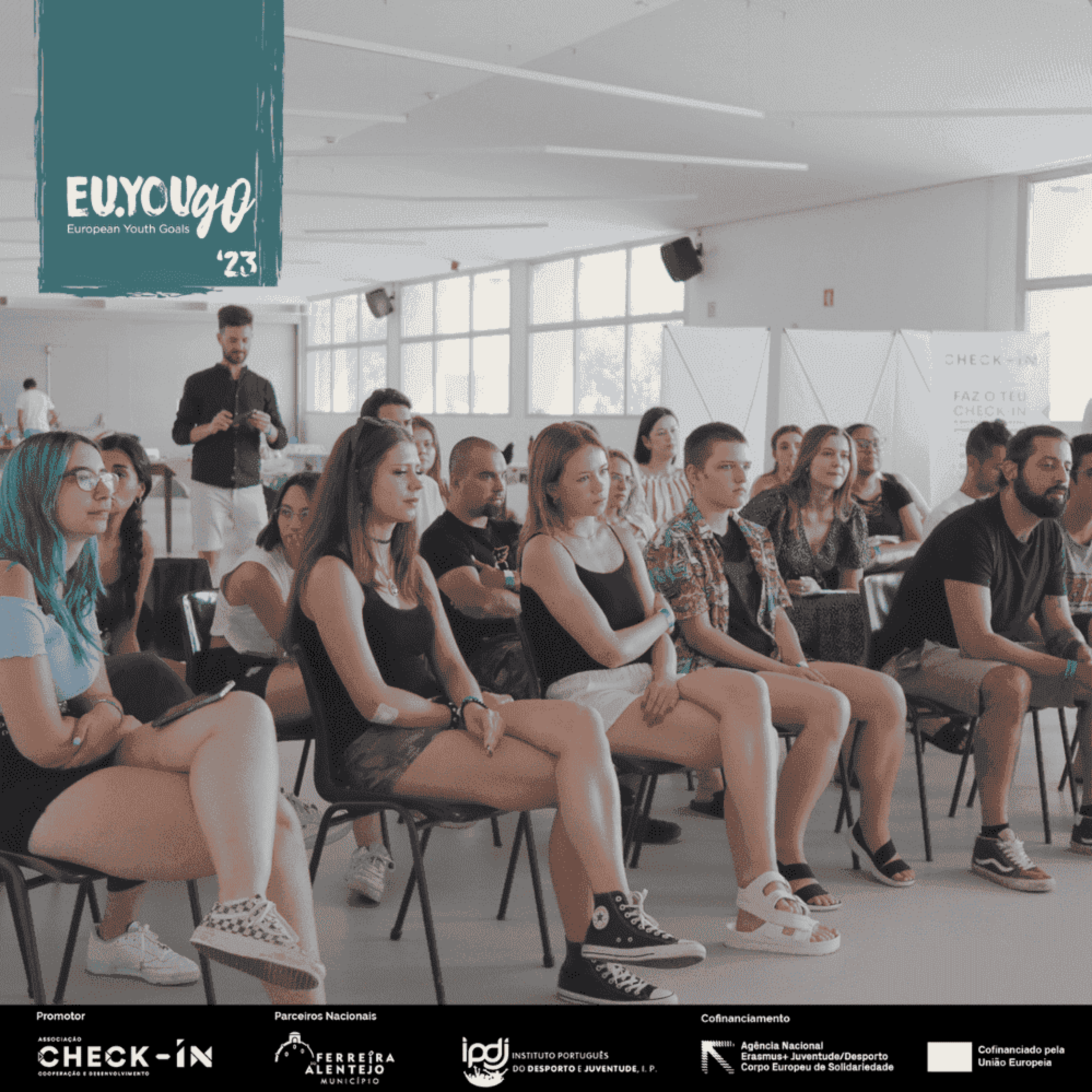
The afternoon was the first dive into the topic of the project. Firstly, we discussed some logistics, such as the schedule, the rules, the different opportunities through the Erasmus+ program and also sharing their contributions, expectations and fears for the upcoming days! The last activity of the day was a dramatization of the European Youth Goals that we are focusing our project on: Our youth exchange was focused on the following EYG: RETIRAR ESSA PARTE A VERMELHO Connect youth with EU (YG1), Quality learning (YG8), Youth Organizations & European Programs (YG11) and Inclusive Societies (YG3), while the 2023 edition pays special attention to Information and Constructive Dialogue (YG4). Splitted in groups, participants though of small theater plays to represent the YG they’re exploring and then performed it – the audience had to guess which YG they were talking about. With the activities finished, it was time for reflection groups and have some free time before dinner. Then, it was time to have dinner and a free night to rest from this intense first day in Portugal.
Our day started with an energizer outside, to enjoy the beautiful weather Ferreira do Alentejo has to offer.
After that, was time to start working again WITH in our project. The first activity of the day was the creation of the EU.YOU.GO country. And what does this mean? That, in groups, our participants delved into topics such as government, flag, culture, constitution and anthem and made them reflect the values that should be address in which of these topics.
The second part of the morning was the first time they had to work in their national teams. This was because they had to analyze where their countries stand in terms of the European youth goals. Through an online questionary previously prepared, the participants accessed some data and had the responsibility to draw some graphics and conclusions that seemed to them the most important to share. Then, they presented their findings and observations with the whole group and it was interesting to note the differences or similarities between the countries!
The afternoon was the time to give an official start to our project. To engage the local population, we organized the EUYOUGO Conference, where we talked about our project and our work, and promoted and invited everyone to the final show of the project. From the Youth Department of the Municipality of Ferreira do Alentejo, we were glad to have with us Dra. Ana Rute Sousa, who welcomed the participants in the town. To finalize our conference, we discussed the YG4 – Information and Constructive Dialogue and, for this specific topic, we invited Dra. Diana Almeida, from Instituto Português para a Juventude e Desporto, who talked with us about the importance of these topics and how we can collectively address them.
The Conference finished a bit earlier, which gave us some free time to rest before dinner, WHICH WAS VERY WELL RECEIVED because tonight is Intercultural Night! The first countries on stage were Portugal, Latvia and Greece. All the participants from these countries promoted very well typical food and games from their countries, and everyone had a great time together!
As everyday, we start the morning outside with some energizers and today Italian team is the responsible one for this!
After, it was time to start with the workshops! During the morning, we introduced the 4 workshops available this year (music, theater, dance and visual arts) and the fantastic facilitators team (Marco and António, Maria, Sara and Sarah).
During the morning, each one of them had 30min to explain to the participants what are their ideas for the workshops and proposed some exercises to exemplify what participants can expect if decided to join them. After all the four presentations, participants splitted themselves according to their preferences.
Then, after lunch, it was time to start the workshops. The facilitators are still exploring the territory to see the best they can perform with our participants. On the visual arts workshops, participants started by exploring the connectivity between words and art, namely, starting painting and drawing a person based on words and adjectives. The theater group explored exercises that made them aware of space, body and the group as a whole. The music workshop was focusing in polyrhythms and exploring the expectations of participants and how could the workshop be shaped in a way that everyone develop some skills and be happy in participate and perform. The dance group was learning that everybody can dance and that every movement can be dance. This was made with movement exercises to feel space, impulses, passing and feeding the group energy and balance.
After this day full of new experiences and expectations, it was time for the second part of intercultural night. Tonight on stage we had Spain, Poland and Italy, who presented us with local foods and traditions.
It wouldn’t make sense for our participants to spend ten days in Ferreira do Alentejo and not have the chance to get to know the town. Therefore, this morning, in collaboration with the Municipality and the Youth Department, participants spent the morning in the museum, where the guide explained the History that surrounds us, and the influences in Ferreira and the legends around it.
In the afternoon was finally time to enjoy time in the swimming pool. After dinner, participants choose to have free time to spend the way they preferred.
After having time to rest, it was time for an intense ride! The next four days were fully dedicated to the workshops. After introductions, participants did some more exercises to explore their capacities and skills. Later, they decided what they would like to prepare to present in the final show.
The facilitators also opted for a collaborative final show, which means that the groups usually used these days to gather together (for instance, dance and theater spent one afternoon together), to join forces in creating an awesome performance.
The dance workshop started by stretching and warming up the body through different dances and movements that explore speed, density, flow and weight. Later, they used an exercise in pairs to feel the weight and lightness of movements and understand dance as a response to others’ impulses and communication. On this first approach to dance, participants also took the components of elements – water, earth, fire and air – to create a short choreography.
The new day was the day for floorwork. To begin with, there was a mirroring the partner exercise, to explore movement and concentration. They also met the music workshop, to learn how to improvise a dance according to the music played. In the afternoon it was proposed to work as a choir, in order to build a deep sense of listening and improvising in group – creating a body made of individual bodies that follow a common path – becoming a collective (like the groups of birds flying together, etc). To end this second day, there was an exercise of movement meditation, which is to dance the inner body and express emotions.
The next day was the day to work with inner impulses, and explore different qualities of dance such as speed, flow, weight and density of movement. The participants also got together with the visual arts group, so they could understand how others perceive dance and what’s happening on the stage, making sure that their intentions when dancing are well received by the audience. After that, they also got together with the theater workshop, to share efforts in constructing a choreography that represents emotions and their physical representations.
After the learnings of these three days, participants of the dance workshop got together to decide what they want to perform on the final show and rehearse in bigger and smaller groups.
The visual arts started by exploring the concept of the 7 elements of visual arts. Later, they explore those concepts by observing one grafitti present on the walls of the venue. Other exercise was about collaborative art, where each one of them started a drawing and, after one minute, passed it to the next one, who would continue the drawing, until all the members of the workshop contributed in all the drawings. Another exercise about collaborative art was drawing and painting, altogether, a long piece of paper, without verbal communication.
On the next day was time to use our hands differently. The proposal was to use clay to build different architectonic elements present in Ferreira do Alentejo, who could be use as decoration of the stage of the final show or souvenirs for those who attended the show. The participants also got together with the theater group to explore shapes, which include drawing their colleagues during their theater exercises, for instance.
The workshops continue on the stage, so participants could feel the space and get inspiration to decorate it. They also joined the dance workshop, where they assisted to four dances about the elements and then had to create a collaborative painting based on what they watched. Later, it was time to join the music workshop and draw some music instruments.
The fourth day was spent in creating origami to decorate the stage. They also discussed the possibility of performing live drawing and live painting during the show, and decided who would do what.
The theater workshop started with a challenge to the participants: introduce themselves with movement S and then exploring some theoretical knowledge and concepts on how to be on a stage. Also, the participants worked around the concept of “ubuntu” (which means I am because you are), as a way of move and interact on stage.
The next day was dedicated to elements of storytelling and how to use words to work on a performance. After these experiences, participants debriefed which ones they felt would be a better suit to use on the final performance. In the afternoon, it was time to get together with the visual arts group, to work in shapes and human sculptures, and understand how their work on stage is perceived by those who are watching (audience).
The workshop continued on the following day by adding emotions. The exercises were based on adding movement PARAMETERS to words and sentences, and then adding emotion to it. After that, the group got together with the music group, in order to let the participants express themselves on stage and the musicians could create a soundtrack to the movements they were watching. In the afternoon was time to reunite with the dance workshop, in order to share efforts in constructing a choreography that represents emotions and their physical representations. After this intense meetings THERE was also time to DO some improvisation exercises and brainstorming ideas for the final performance.
The last day before the performance was to work on what they would bring on stage. This included preparing a structure for the performance and working on first and final scenes and how to glue them together with the other workshops’ groups.
The music workshop started their work by experiment to create music with different objects that are not music instruments. Later, they practiced rhythm exercises and understood the basic concepts of music and how frustration is part of the creative process. They also had the opportunity to do their own solo performance and listen to themselves.
On the next day, the participants reflected on the work they did and how to continue from there towards a performance. They explore different exercises, even if goofy or disconnected, to understand in which direction participants were more comfortable to go with. Later, they joined the dance workshop and were challange to create music to flow with the dance their colleagues were doing. On this day, they also explore the concept of silence and why it is important for the music creation process.
The work with other groups continued, this time with the theater workshop, while also creating music that would match the performance of their colleagues. Some other exercises include the exploration of a soundtrack and rhythm. The group also visited the stage where the final show will happen, to ensure details like acoustic and position of instruments.
The next day was time to create the final performance and create ideas for music and understand how to collaborate more for the final show. A lot of creative work was done in order to establish the music to be played and the roles and tasks which participants would take during the final show.
This was the day of the final show. Participants were excited but also nervous. They spent the whole day in rehearsals – first in their workshops, then altogether, deciding the final order of the show and its’ rhythm and flow. The decoration of the stage was done by the visual arts workshop, and the staff from the Municipality helped with the lightening and music installation. Before the show, participants also took their time to breathe and be confident in the work they developed in the past days.
The spectacle ended up being a success, as a lot of people appeared, curious to see what the foreigners prepared. Everyone enjoyed to see the different dances and performances.
After, everyone used the rest of the night to celebrate the success of the show.


After such a success, this day was a reflection day on the whole youth exchange and their participation and engagement in all the process. It was also time for final evaluation and final goodbyes.
EU.YOU.GO é um intercâmbio juvenil internacional que envolve jovens provenientes de 6 países diferentes (Letónia, Itália, Espanha, Grécia, Malta e Portugal), que se realiza de 29 de Julho a 9 de Agosto, em Alcoutim. Durante 10 dias vamos celebrar o Ano Europeu da Juventude e estimulando a criatividade, através da expressão corporal, sonora, plástica, cénica e multimédia, representarem a diversidade cultural ali presente.
A Associação Check-IN desenvolve este intercâmbio inserido nos “European Youth Goals”. Entre o ano de 2021 e 2027, trabalhamos 4 objetivos: a União Europeia Conectada com os Jovens (YG1), como impulsionar a Juventude rural (YG6), criar uma educação de qualidade (YG8), envolver as organizações de Juventude e Programas para Jovens (YG11). E em 2022, acrescentamos as Sociedades Inclusivas (YG3). Com recurso a materiais do European Youth Goals será produzido um espetáculo que será apresentado no Castelo de Alcoutim, dia 7 de Agosto, pelas 22h, para o qual todos estão convidados a assistir gratuitamente. Podem contar com música, dança, animação de rua, intervenções plásticas e mais importante que tudo muita alegria e diversão! Convidamos todos a estarem presentes no evento organizado pela equipa constituída pelos participantes dos vários países, membros da Associação Check-In e profissionais das diversas vertentes artísticas que irão coordenar a produção do espetáculo final.
Este projeto foi aprovado pela Agência Nacional Erasmus + Juventude em Ação, com a referência: 2021-1-PT02-KA151-YOU-000012019. Contamos com o apoio altamente comprometido da Câmara Municipal de Alcoutim e ainda do Instituto Português do Desporto e Juventude, a parceria de 5 entidades europeias e outras entidades locais.
Mais informações: info@checkin.org.p
Parceiros internacionais
– UpBeat Music – Malta
– OMIX – Espanha
– Agrado – Itália
– NEOI – Grécia
Parceiros Nacionais
– Câmara Municipal de Alcoutim
– Instituto Português do Desporto e Juventude
Coofinanciado
– Agência Nacional da Gestão do Programa Erasmus +: 2021-1-PT02-KA151-YOU-000012019
No dia 3 de julho, foi realizado uma reunião online de Preparação para o Intercâmbio. Durante esta reunião, tivemos a oportunidade de conhecer os Líderes de cada parceiro internacional, os jovens participantes e partilha a logística do projeto, Foi uma reunião muito produtiva que conseguimos preparar com sucesso todo o projeto.
Até já 😉
Aqui podes ver como foram todos os dias deste intercâmbio:

Finally, it was time to start our Youth Exchange. After a long time of travelling to this small village surrounded by Guadiana River and in the border with Spain, the participants rested and are ready to start to know each other. For that, we played some games with them. The first game was super easy. Each participant said their name and associated a gesture from an activity they particularly enjoy to do. Then, everybody repeated the name and the gesture. The second game was a letter exchange, so everybody, after learning the names, could learn how to write them. Each participant had to find a new friend whose name has a letter in common with his own name. The first to write his own name borrowing letters from others won the game! Of course, this task was most difficult for those who had a bigger name or strange letters, but everyone managed to finish it! The last activity was a team building challenge called Mission Impossible! The group faced a lot of different tasks they needed to complete in group! For example, they learnt to dance the zorba, they created an anthem for this youth exchange and had to write EUYOUGO with human letters. Fortunately, they proved the mission impossible to be possible and finished all those difficult tasks together.

After this first part of the morning, it was time to discover more about the program of the youth exchange. Check-IN prepared a Presentation Tour, where participants travelled around four different stations. In those, they discovered in more detail what was going to happen in which day and presented their questions about things that might not have been clear for them. They also did some paper work necessary and learnt about the Erasmus opportunities. Finally, the last stop on the tour was about logistic aspects of the project, and basic rules they need to follow so everybody could enjoy the next days! Before lunch there was still time to reflect on the journey ahead of them in Alcoutim. Everyone shared their expectations, contributions and fears. For example, they had expectations to meet new people, learn more about each other’s’ culture and discover more about the European youth goals, whilst they feared the heat or not being able to sleep. After lunch, there was some time to rest and then to start working on the topic of the European youth goals (EYG). Our youth exchange was focused on the following EYG: Connect youth with EU (YG1), Quality learning (YG8), Youth Organizations & European Programs (YG11) and Inclusive Societies (YG3). The participants were split into groups, and which had the task to write about what each of these goals represented to them and in which ways they can be developed and implemented. After present their work to the rest of the group, it was time for reflection groups and have some free time before dinner. Then, it was time to have dinner and a free night to rest from this intense first day in Portugal.
The second day started with an amazing energizer. Everyone is still making progresses into getting to know each other and to know everyone’s names.
Then, it was time to start with an activity related to the European youth goals that was also a team building activity. The participants had to create the EUYOUGO country, and, for that, they needed to work together to create an anthem, a constitution, a government, the culture, and the flag. They shared the ideas with the whole group and everyone agreed on the suggestions, so the EUYOUGO country was officially established!
The following activity was about the good practices they know about a specific youth goal. This is a nice way to wrap about the discussion the group had until this point and to introduce a bit the next activity. But before, it was lunch time.
After lunch, there was time to rest a bit and enjoy the local beach or just relax on the shadow. To get into the mood to develop some more work, the participants had an energizer. The activity of this afternoon was about the YG3 – Inclusive Societies. The participants worked in groups and discussed what an inclusive society means for them and what was is “must have” in any society so it is assumed as inclusive.
This night was also the first intercultural night. Portugal and Latvia had the honor to inaugurate and present their countries, through some interactive games and showing dances and sharing food.
This morning was a special one. We had the privilege to be received by councilwoman from Alcoutim, at the Alcoutim castle. She welcomed us to the village and explained a bit of its history and its importance. It was really important for the participants to understand more of the history of the place where they are.
Back to our headquarters, it was time to present the findings about the stage of the youth goals in each and every country. The participants shared a questionary with friends and collected some results, that they previously shared with the group. This was an important activity to understand better what work has been done and what can be improved to reach the European youth goals.
After lunch and some resting. It was the perfect time to start to think about the final performance that was scheduled to be done at the Alcoutim Castel. So, before everyone had to choose in which workshop they wanted to participate – theater, music, dance or communication – they had the opportunity to be introduced to all of the workshops and some activities in each. This afternoon was dedicated to the theater workshop. The whole group had the chance to do some exercises to explore their body and the space, and to get introduce to the activities they would further develop.
The end of the afternoon was free – some enjoyed the beach, others decided to sleep because another long night was coming. The stage today was for Italy and Greece, who presented us with local foods and traditions.
The initial workshops continue! After energizers, the morning was dedicated to the music workshop. The participants were introduced to the basics of music and challenged to search for sounds in the most simple and basic things – for example, throwing a stone into the water and record the sound, close the door and record the sound, etc. After they completed this task, they gather again all together and mixed the sounds to originate a simple music/rhythm.
After the lunch break, it was time to introduce the dance workshop. The main idea was to explore different types of music and let each participant express themselves through the body movements.
This night was the last intercultural night from the project and the stage was for Spain and Malta, the only ones left. They presented us with some quizzes and fun facts about their countries and brought some food to share!
Today was finally time to chose the workshops that the participants would enroll until the end of the youth exchange, in order to prepare the final show at the castle.
After these choices, they started to work on their groups.
The music group started by explore the instruments they had with them – improved drums, a piano and a musical keyboard, etc. The theater group deepen the exercise they did in the introductory workshop, exploring the notions of body, movement, voice, etc. The dance group explore different genres and discuss in each one the participants felt more comfortable to work in for the spectacle while the communication group started to prepare and plan some interviews with the locals and spread the communication materials through the village, such as the flyers and posters.
After the dinner, there was a concert in the village and everyone decided to gather together and enjoy the night there.
We are in the middle of the youth exchange and the morning was dedicated to escape from the intense work rhythm. The participants had the opportunity to learn more about the culture and history of the village and enjoy watersports in the river. The municipality offered a guided visit to the castle, where were some archeological findings in the region. In the river, the participants did kayak and took the opportunity to paddle to Sanlúcar del Guadiana, the town on the other side of the river, in Spain.
In the afternoon, the activities in the workshops continue, so the next day they could finally start the working on the final show.
As the day was very tiring, the night was free and some participants used this opportunity for a night swim in the beach.
The final show is approaching and everyone is very excited but nervous about it. The music workshop did a lot of progresses. Together, they created a melody and a poem about youth goals and self-discover. This took a lot of time to be as perfect as possible and to let everyone find their role – some participants played different instruments, others had to sing or do some choir.
The dance group started to work in pairs or in trios – they had freedom to choose the song and dance style and develop a choreography from there. With the help of the facilitator, things started to come together so they had a lot of different dances to present on the final show. The theater group continue with improvisation exercises that explored the capacity of telling a story with talking, only with gestures, because the participants don’t speak Portuguese and the viewers of the show don’t speak English.
The communication group collected some pictures and also some footage from Alcoutim to include in the final videos to promote the youth exchange.


Today is the day! Participants can’t wait to show to the people from Alcoutim what they have been preparing for the show. The day passed in a rush, with everyone adjusting the final details. They had to look for some costumes to do their performances and decide, all together, the order of the acts. They also used the day to breathe and be confident in the work they developed in the past days.
The spectacle ended up being at the school, and a lot of people appeared, curious to see what the foreigners prepared. Everyone enjoyed to see the different dances and performances and listen to the original music prepared specifically for this youth exchange.
After, everyone used the rest of the night to celebrate the success of the show.
You can watch the show here
Durante o projeto serão divulgados todos os materiais produzidos.
Podem ver o espetáculo final aqui
Podem ver os vídeos promocionais aqui e aqui
Podem ler notícias sobre o EUYOUGO em:
– Algarve Primeiro aqui
– Mais Algarve aqui
– Diário Online Região Sul aqui
– Rádio Horizonte aqui
– Jornal do Algarve aqui